Back-to-School Shopping: What’s Really Hiding in Your Child’s Backpack?
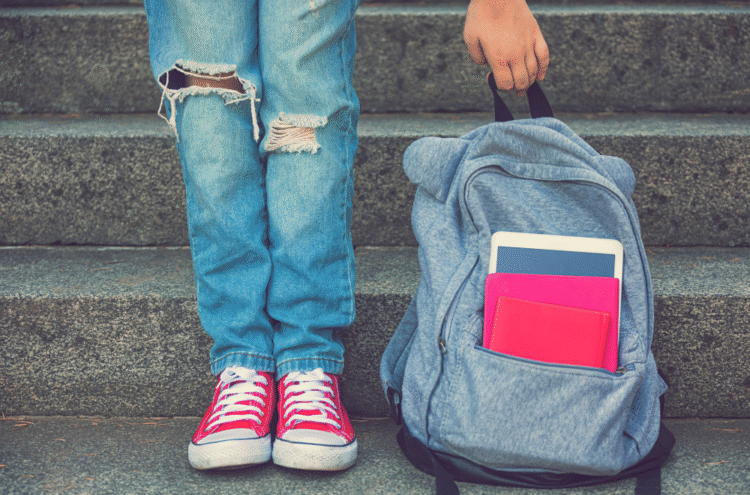
As the new school year approaches, back-to-school shopping is in full swing. From backpacks to art supplies, many of the items marketed toward kids are bright, colorful, and fun — but they may also contain toxic chemicals that impact your child’s health and the environment.
At Beaches Go Green, we believe knowledge is power. Let’s take a closer look at what’s really in your child’s backpack — and why safer swaps matter.
Backpacks & Lunch Boxes
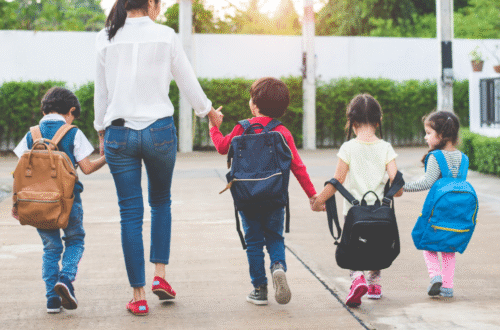
Many brightly colored backpacks and insulated lunch boxes are made with PVC (the most toxic type of plastic) and may contain phthalates, lead, and flame retardants. Over time, these chemicals can leach out, especially when exposed to heat, sunlight, or everyday wear and tear.
Health risks include:
Hormone disruption
Links to respiratory issues
Learning and developmental concerns
Art Supplies
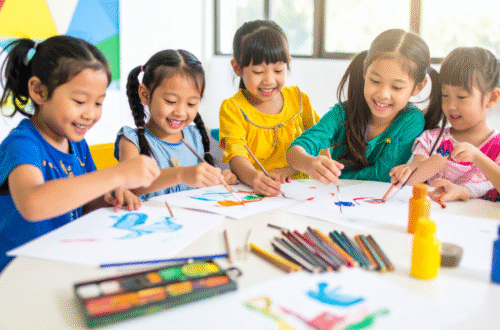
Scented markers, pens, glue, paints, and modeling clay often contain synthetic fragrances and phthalates. Because children frequently touch these supplies — and sometimes put their hands or tools in their mouths — their exposure risk is much higher.
Health risks include:
Hormone disruption
Developmental and reproductive toxicity
Possible links to behavioral changes and ADHD
Clothing: When Fabric = Plastic
Polyester is plastic — and it makes up about 60% of all clothing produced today. It’s especially common in kids’ graphic tees, leggings, uniforms, and activewear. These synthetic fabrics often contain chemical additives like PFAS (used for water and stain resistance) and shed thousands of microplastics with every wash.
Health risks include:
Hormone disruption
Skin, eye, and lung irritation
PFAS linked to immune suppression and developmental delays
Plastic Food & Drink Packaging
Single-use plastics are heavily marketed toward children, especially for snacks and drinks. These plastics often contain BPA and phthalates, which can leach into food and beverages — particularly when heated.
Health risks include:
Hormone disruption
Reproductive and developmental harm
Possible links to neurological issues
To learn more about detoxing your child’s lunch box, CLICK HERE to view our Quick Guide.
Why Are These Chemicals Allowed in Children’s Products?
Kids are naturally drawn to bright colors, strong scents, and soft plastics — exactly the features that often rely on toxic chemical additives. Children are also more vulnerable to these chemicals because their bodies and organs are still developing.
Unfortunately, regulations in the U.S. are weak, and the school supply industry has many loopholes. Most chemicals used in consumer products — even those marketed to kids — are not required to be tested for safety. In contrast, Europe and Canada have taken stronger action, banning chemicals like BPA, phthalates, artificial dyes, and flame retardants from everyday items. The U.S. still has a long way to go.
The Environmental Impact We Can’t Ignore
These chemicals don’t just harm our health — they harm the planet too.
The production of PVC, phthalates, polyester, and other synthetic materials fuels pollution, toxic waste, and climate change. These substances contaminate air, water, and soil, threaten wildlife, and persist in the environment for decades.
But don’t give up — healthier, planet-friendly choices do exist!
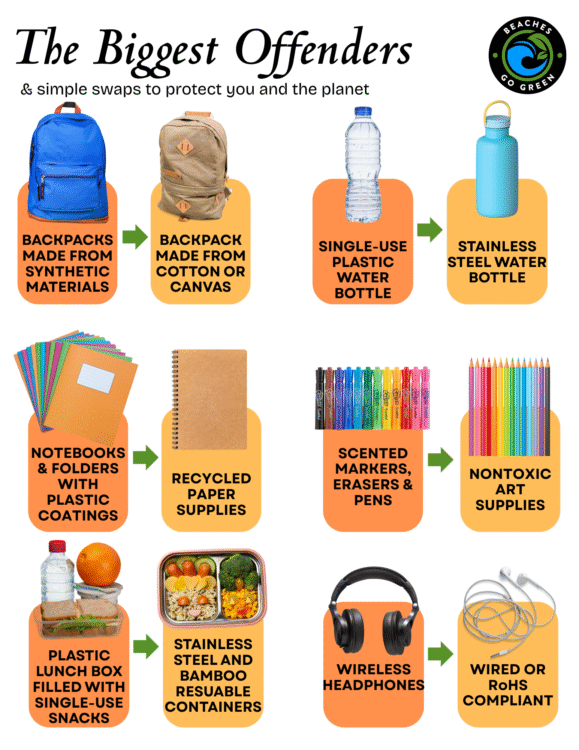
Safer School Essentials Start With Awareness
Understanding what’s in your child’s backpack, clothing, and school supplies empowers you to make safer choices for their health and for the planet.
🌎 Knowledge is power, and together we can create a healthier future for the next generation.
Click here to see our full backpack detox as part of our “Dextox the Bag series”.